
Reviewed · SCUBA DIVING
Paphos: Discover Scuba Diving Half-Day Tour
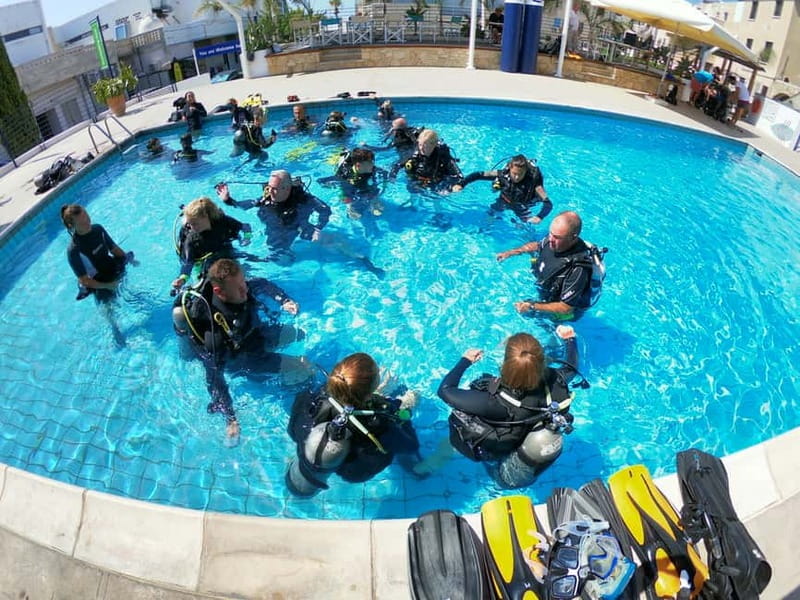
This is one of the easier ways to get real underwater experience in Cyprus, without jumping straight into the deep end. You practice the basics first, then head to the shore site near the Roman Wall for your first controlled go to 5m, with a team led by PADI Professionals and in-water support.
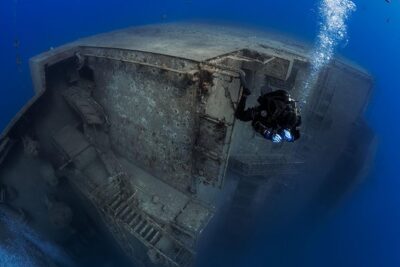
What I like most is the training flow. You start with hands-on gear and skills in a pool, then you move to open water once you can equalize and breathe calmly. I also love the setting, the underwater world around the ancient Roman harbour includes features like amphorae and anchors, with a chance of seeing green sea turtles in summer.
The main drawback to plan around: you’re required to complete an eLearning module before you arrive and you must pass a medical questionnaire. If you are not comfortable swimming, or if you have specific conditions (like pregnancy, epilepsy, or heart/lung issues), you will not be able to participate.
Key highlights to focus on
- Pool first, open water second, so you build confidence before you go near the 5m limit
- Small group size (up to 8), which means more attention during skills and equalizing
- Roman Wall shore site with amphorae, lost anchors, and summer sea turtles
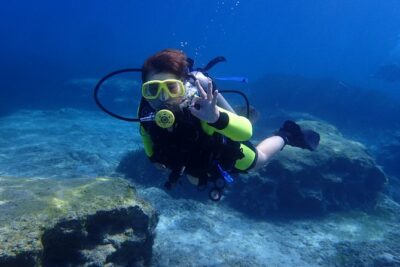
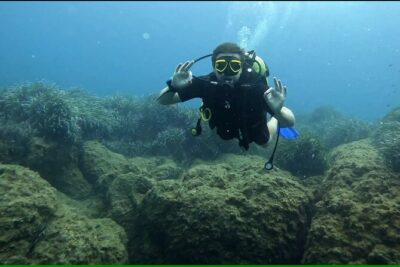
- Clear safety briefing including hand signals and how you’ll communicate underwater
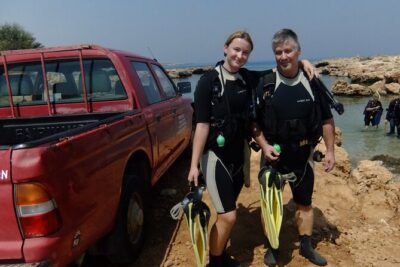
- English and Greek instruction, plus patient support shown in past groups like Mick, Pavlos, Chris, Emma, and Sophie
Your first 5m in Paphos, without the usual stress
Paphos is a smart pick for a first-timer because the water conditions are typically good for learning, and the dive site is close to the shop. You’re not sitting on a boat for hours hoping things go your way. Instead, you get a structured lesson that leads you into a short, controlled underwater session.
The tour is designed around your first open-water descent to 5m. That number matters, because it helps the instructors plan breathing practice, buoyancy cues, and communication. You’re not aiming for a long, exhausting outing. You’re learning how to manage yourself down there.
And yes, the underwater theme is a big deal. You’re not just seeing fish. You’re visiting an area linked to the old Roman harbour, where remnants like amphorae and anchors can show up as you move along the site.
More diving out of Paphos:
- Half-Day Scuba Diving Tour – Discover Scuba Diving!
★ 5.0 · 669 reviews - Beginners Discover Scuba Diving By Boat, Best Spot In Cyprus
★ 5.0 · 26 reviews - Cyprus: Introductory Scuba Lesson and Dive with Transfer
★ 4.9 · 682 reviews
Cydive check-in, warm-up drinks, and a gear setup that matters
Your experience starts at Cydive on Poseidonos Ave, in the Paphos Harbour area. It’s an easy place to find if you are driving toward the Papantoniou Supermarket in the harbour, and it’s also workable if you’re arriving by bus to the Paphos Harbour stop.
Before you even get in the water, you’ll get welcome refreshments. That sounds small, but it helps a lot if you’ve traveled in and you’re a bit tense. You also get time to settle your body before equipment fitting and briefings.
The gear is included: wetsuit, boots, and full scuba equipment. That means you’re not hunting down rentals or worrying about whether something will fit. Still, you should show up ready. Bring swimwear, a towel, sunscreen, and a hair tie so you can get comfortable fast.
One practical note: cameras are not allowed, so if you want memories, plan on the shop’s photo option (more on that later). And leave your nicest shoes behind. High-heeled shoes are not allowed.
The safety briefing that turns anxiety into routine
A big part of this tour is the classroom time on land. You’ll have a safety briefing that runs about 30 minutes, and it is not just a formality. This is where you learn how you’ll equalize your air spaces, which is essential for first-timers.
You’ll also cover hand signals and how you’ll communicate underwater. That piece is a quiet confidence builder. When you know what the instructor will do and what you should do, your brain stops searching for answers in the water.
Finally, you get a breakdown of the skills you’ll do. In past groups, you can see the payoff of that approach. In one group, Pavlos was praised for staying calm when someone in the party was nervous. In another, Mick was praised for clear instructions and for working carefully with a student who needed extra reassurance. That kind of patient pacing is exactly what you want when you’re new.
Pool practice: the skills you repeat until your body gets the message
After the briefing, you’ll get into the training pool and practice. This is roughly 1 hour of class, and it’s structured to help you do three things well: breathe with the regulator, manage your buoyancy, and move safely in full gear.
The pool segment is where you conquer the basics like equalizing comfortably and swimming around while wearing scuba gear. It’s also where you learn how the equipment works, and what each piece is for. That matters because the first time you feel pressure in your ears, you want the technique to come automatically.
If you’re someone who panics in new situations, the pool step is your friend. You get a controlled environment, and your instructor has time to correct small habits without rushing.
Tip I’d follow if it were my first time: don’t force speed. Focus on slow breathing and steady movement. If you can stay calm in the pool, the open water part becomes much easier.
A few more Paphos trips worth pricing up
- Blue Lagoon (Akamas) Bus & Boat Tour with Water Slide from Paphos
★ 4.5 · 2,496 reviews - Paphos/Akamas: Blue Lagoon Bus & Boat Tour with Water Slide
★ 4.7 · 2,242 reviews - From Paphos: Blue Lagoon and Baths of Aphrodite Day Trip
★ 4.7 · 1,730 reviews - 100% Cyprus – Tour to Troodos mountains and villages (From Paphos)
★ 4.5 · 1,562 reviews
Walking to the Roman Wall shore site: short transfer, big payoff
From the training area, the walk to the shore site is short, around 3 minutes on foot. That’s a nice detail. You are not spending your energy on transport. You keep your focus and save your gas, literally and figuratively.
When you arrive at the site near the Roman Wall, you’ll spend about 1 hour in the water. This is where the tour’s “first open-water” promise turns real. You should expect a supervised experience with ongoing cues.
The seafloor setting is part of the thrill: the Roman harbour area gives you a sense of place. You’re not just drifting. You’re exploring features like ancient amphorae and lost anchors, which can make you slow down and look longer than you expected.
In summer, there’s also a chance of seeing green sea turtles. You might not spot them, but the possibility is enough to change the way you watch the water. It’s the kind of moment that makes a first scuba session feel like a story you’ll tell later.
What you actually see underwater: amphorae, anchors, and sea life cues
In open water, visibility can make or break your enjoyment. This area is known for clear Mediterranean water, so you’re more likely to make out the shapes you care about.
On the Roman Wall site, keep your eyes open for:
- Roman amphorae, which often show up as pottery forms or broken remnants
- Lost anchors, where you can see heavier objects settled into the seafloor
- Sea life, and in summer, a possible green sea turtle
You may also feel the difference between pool depth and open water depth. The point is not to chase adrenaline. The goal is to keep yourself comfortable at the moment, use your signals, and follow the instructor’s pace.
In past groups, the most praised moments were not about doing complicated skills. They were about feeling safe enough to enjoy the experience. That usually comes down to two things: clear instructions before you go in, and a team that stays attentive when you need extra time.
Photo moments and the camera team: how to plan your memories
There’s a photo stop early in the session (about 10 minutes). Then after your underwater time, there’s another photo stop (about 20 minutes). The intent is to capture you looking good and to document the experience.
A helpful detail from previous participants: Charlie has been mentioned as part of the team that shoots photos, and in at least one case, people could watch a video after. You should also know that underwater photos and videos are not included in the price. If you want them, budget for the add-on when offered.
Also, don’t bring your own underwater camera. Cameras are not allowed, and waterproof cameras are also listed as not allowed. So the best value move is to rely on the shop’s photography option.
If you’re hoping to save battery space for later, you can still take normal photos before and after, during the photo stops.
The finish: a quick wrap-up plus coffee and tea
After the open-water portion, you’ll do a short class time (about 15 minutes). This is where the instructor typically tidies up what you practiced, checks that you’re leaving with the right mindset, and reinforces safety points.
Then you’ll get coffee or tea along with fresh fruits. That post-water snack is simple but useful. Your body is cold faster in sea water than most people expect, and food helps you reset.
The vibe at this stage tends to be upbeat. Many first-timers walk out proud because they did the full sequence, not just the pool part.
Price and value: what $106 buys you in real terms
At about $106 per person for a 3-hour experience, the value comes from what’s included and the training format.
You get:
- Scuba equipment (including wetsuit and boots)
- An eLearning product for the PADI Discover Scuba preparation process (access is provided after booking)
- Water, tea, coffee, and fresh fruits
What you do not get:
- Underwater pictures and videos
- Towels and sunscreen (bring these)
When I think about value for this kind of first-timer tour, I focus on two questions: do you get enough real instruction time, and do you avoid extra costs that catch you by surprise? Here, the big hidden-cost risks are mostly handled because the equipment and training materials are included. The one clear extra is photography.
Also consider the small group size, limited to 8 participants. In practical terms, that often means you spend less time waiting and more time being coached.
If you are comparing this to booking a full certification right away, this half-day format is a smart try-before-you-commit option. If you end up loving it, you already know your limits and your questions going into the next step.
What you must do before you show up (or you’ll have to reschedule)
This is the part that decides whether your day runs smoothly.
First, you need to complete the digital eLearning before the activity date. Once your booking is confirmed, you’ll get a link. If you haven’t completed it, you’ll need to reschedule.
Second, you must complete a medical questionnaire. Certain conditions mean you cannot participate, including epilepsy, heart or lung conditions, and pregnancy. Also, if you are feeling congested, you should consider rescheduling until your cold clears.
Third, you must be comfortable swimming. If you cannot swim, you will not be able to participate.
Finally, plan your flight carefully. You cannot do diving on the same day as taking a flight. You should wait a minimum of 12 to 24 hours after the underwater session before flying.
Practical tips that make your first underwater session smoother
If you want this to feel fun instead of stressful, you can control a few things.
1) Do your equalizing routine calmly
The instructors will teach you how, but your mindset helps. Don’t hold your breath. Breathe steadily and follow the cues you were given in the briefing and pool.
2) Wear sunscreen before you go, then reapply
You’ll be in the sun on land, and sunscreen is not included. Bring it and apply before the session starts.
3) Bring a towel and plan for damp gear
Even if you dry off, you may end up carrying damp items. A towel helps you reset quickly before leaving.
4) Keep your hair secured
A hair tie is required. It’s one of those small rules that prevents a messy distraction mid-session.
5) Be honest about your comfort level
If you feel anxious, say so early. In past groups, instructors like Mick and Pavlos were praised for patience and calm reassurance, and that is exactly what you should expect and ask for.
Who should book this in Paphos, and who should pass
This experience is best for adults and older kids who are comfortable swimmers and want a structured introduction. It’s also ideal if you want a meaningful underwater theme, Roman harbour remnants and possible sea life, without committing to a full certification right away.
It is not suitable for:
- Children under 10 years
- Pregnant women
- People with heart problems
- People with respiratory issues
- People with epilepsy
It’s also not a good choice if you can’t complete the eLearning ahead of time.
If you’re fit, willing to learn, and you want guided support, this is a great first step. You’ll leave with more than a memory. You’ll leave with skills you can build on.
Should you book this Paphos Roman Wall underwater intro?
I think you should book it if you want a calm, instructor-led first underwater experience, with a team that clearly focuses on safety and pacing. The pool start, the short walk to the Roman Wall shore site, and the chance to see amphorae, anchors, and sea life make it feel more personal than a generic swim-and-snap outing.
Skip it if the logistics won’t work for you. If you cannot complete the required eLearning, if you cannot swim confidently, or if your medical questionnaire rules you out, you’ll waste effort and time.
If you’re on the fence, this half-day format is actually a good test drive. You’ll learn what it feels like to wear the gear, breathe underwater, and stay relaxed down to 5m, then decide on your next step with real confidence.
FAQ
How long is the Paphos Discover Scuba experience?
The tour runs for about 3 hours.
How deep will I go on my first open-water session?
You’ll be taken to about 5m on your very first open-water session.
Is this suitable for children?
It is not suitable for children under 10 years old.
Do I need to know how to swim?
Yes. You must be comfortable swimming, and those who cannot swim will not be able to participate.
Is the eLearning required before the activity?
Yes. You receive a link to a digital eLearning product after booking, and you must complete it before your activity date. If you haven’t completed it, you may need to reschedule.
Are photos and videos included?
No. Underwater pictures and videos are not included.
What is included in the price?
Scuba equipment is included, including the wetsuit and boots, plus the eLearning product and refreshments like water, tea, coffee, and fresh fruits.
What should I bring with me?
Bring swimwear, a towel, sunscreen, and a hair tie.
Can I fly the same day as the underwater session?
No. You need to wait at least 12 to 24 hours before taking a flight after diving.
More Half-Day in Paphos
- Paphos: Wave Dancer Half-Day Cruise with BBQ and Open Bar
★ 4.8 · 225 reviews - Paphos: Ocean Vision Half-day Cruise with BBQ, Drinks, Slide
★ 4.8 · 158 reviews - Half-Day Buggy Safari to Akamas Peninsula with Lunch
★ 5.0 · 23 reviews - Paphos: Half-Day Sightseeing Tour
★ 4.8 · 11 reviews
Just reviewed around Paphos
- Scenic Beach Walk with Rescue Dogs★ 5.0 · 3 reviews
- Private Airport Transfer from Hotel to Paphos Airport in a 4-seater taxi★ 3.5 · 3 reviews
- Treasures of Troodos Mountain from Paphos Town★ 3.5 · 3 reviews
- Paphos: Private Yacht Charter with Captain and Drinks★ 5.0 · 3 reviews
- Polis: Blue Lagoon Boat Tour with bus from Paphos★ 5.0 · 3 reviews
- FROM PAPHOS: Snorkeling at the Marine Park (shore)★ 4.3 · 3 reviews
- Luxury Charter on Blue Lagoon Flyer (Karnic CS10) to Blue Lagoon★ 5.0 · 3 reviews
- From Ayia Napa/Protaras/Larnaca: Paphos & Kourion in Italian★ 2.9 · 3 reviews
Scuba Diving, compared.
Introductory Scuba Lesson and Dive with Transfer
Read our review →
Half-Day Scuba Diving Tour – Discover Scuba Diving!
Read our review →
Discover SCUBA Diving with Pissouri Bay Divers
Read our review →Browse the lists this tour appears in